Pulse is a predictive personal intelligence engine. It analyzes my journal entries, Todoist data, and other personal data streams to detect behavioral patterns — both slides worth catching early and momentum worth amplifying.
How It Works
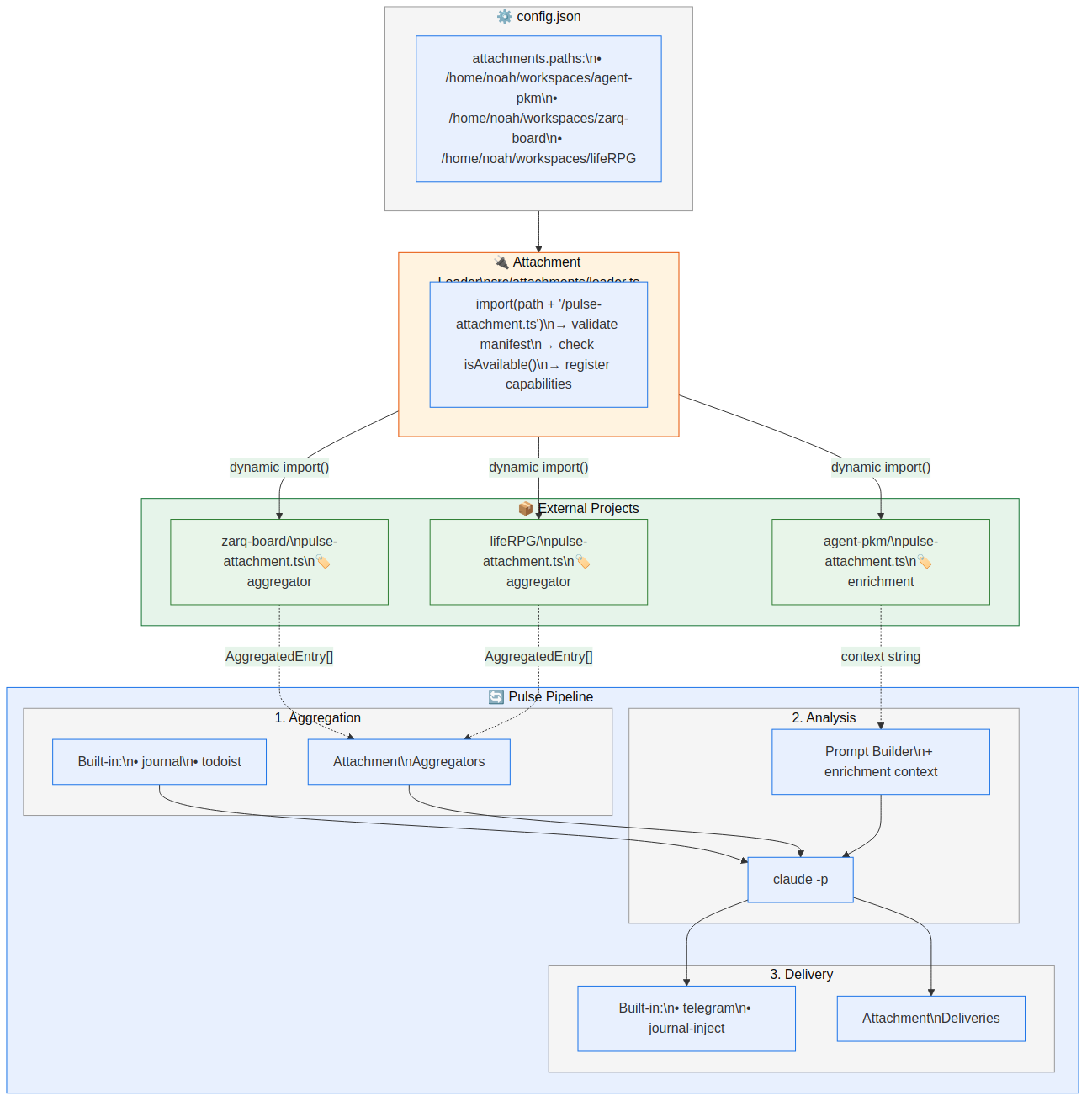
Pulse runs morning and evening on the homelab and executes a four-stage pipeline:
- Aggregate — reads Obsidian journal files and fetches Todoist task data
- Analyze — builds a context-rich prompt with my goals and recent feedback, sends it to Claude, and parses structured signals
- Deliver — pushes high-confidence signals to Telegram and injects a daily briefing into today’s journal entry
- Learn — tracks how I respond to each signal (engaged, dismissed, acted, praised) to refine future predictions
Signal Types
- Prevention signals — early warnings of energy dips, goal drift, burnout patterns, avoidance behaviors
- Amplification signals — opportunities to build on momentum, flow states, learning surges
Each signal comes with evidence citations from my own data, a confidence level, and an actionable suggestion. A plugin-style attachment system lets new data sources (like Oura sleep and activity data) feed the same pipeline.
The Interesting Part
The feedback loop. Pulse doesn’t just fire alerts — it tracks whether each signal earned a reaction, scores its own pattern accuracy over time, and prunes what doesn’t land. Zero runtime npm dependencies; pure Bun APIs, TypeScript strict mode, managed by systemd.